Tag Archives: St. Louis

29 Jul 2020
by Joe Hanrahan

The selection of plays for a theatre group’s season is always an exciting, wildly hopeful, sometimes frustrating process. The scripts must play to a company’s strength, while often exploring new themes and production styles to encourage artistic growth. It has to take into account the appropriateness of available spaces for the plays selected, as well as the available pool of talent and their appropriateness for roles needed to fill. Also, a group has to consider scheduling issues such as holidays that might fall during a show’s run, necessary rehearsal schedules, performer availability, and more. And then, you have to secure the rights for a play — not always an automatic.

At The Chapel: Kicking Off The Season — And Punting It Into Next Season

2020 has proven to be a challenging time for everyone, including theatre companies, most of whom have decided to shut down all theatre for the calendar year. The Midnight Company’s challenges started at the very beginning of the virus outbreak. They’d scheduled their first production for May at a space new to the company: The Chapel. The show they chose would be a reprise of a one-person play they’d initially presented at the 2018 St Lou Fringe Festival, “Now Playing Third Base For The St. Louis Cardinals…bond, James Bond.”

The Midnight Company presents Now Playing Third Base for the Cardinals ... Bond, James Bond
The Midnight Company presents Now Playing Third Base for the Cardinals … Bond, James Bond

Written and performed by Midnight Artistic Director Joe Hanrahan, the script focused on 1964 when a teenage boy — set back by world events like the Cuban Missile Crisis and particularly the assassination of John F. Kennedy — finds the world coming back to life with the emergence of the Beatles, a sensational new movie featuring one of the first superheroes, James Bond, and the race of the hometown Cardinals to a pennant and World Championship. The play explores such diverse themes as the racism black Cardinal players had to face as they made their way into Major League baseball, the role WWII played in JFK’s assassination and the history and growth of one-person shows in the theatre scene.

Because of Fringe restrictions, that production was limited to a handful of performances and limited to less than an hour in length. But still, the show was very enthusiastically received by audiences. Never had Midnight experienced such a visceral reaction to a play. So, thinking that the play (with its crowd-attracting title) could draw larger audiences, it was decided to bring it back to The Chapel in Spring 2020; this time with an expanded script that added depth and new stories to the incidents of the script.

But the outbreak of COVID-19 altered opening plans and Midnight made the cautious decision to postpone the show until July. And as the virus strengthened its grip on the world, it was postponed again until August.

And it was only in mid-July when discussions between the small cast and crew resulted in the difficult decision to reschedule the show for July 2021, at The Chapel. The decision was particularly difficult because the people at The Chapel were unfailingly supportive and enthusiastic about the show, right up until the moment of cancellation. They were preparing to undertake all of the safety precautions pioneered locally by the Kranzberg Arts Foundation. But the final decision rested on the entire team’s belief that a greater number of people might want to see this show, and it should be given the chance to draw those crowds.

If you’d like to take a look at the script of the Fringe production, click here

At Kranzberg Arts Foundation Theatres: The Fall Shows — October

As a resident company of the Kranzberg Arts Foundation, The Midnight Company had two slots to fill in their 2020 Calendar: mid-September and late October, each for three-week runs.

It Is Magic presented by Midnight Company

The October show was the first engagement filled. “It Is Magic” premiered in Chicago in Spring 2019. Midnight management saw the production, and it never left their mind. The play was written by Mickle Maher, playwright, and co-founder of Theater Oobleck in that city. Midnight had already produced two plays of Maher’s: “The Hunchback Variations” and “An Apology For The Course And Outcome Of Certain Events Delivered By Doctor John Faustus On This His Final Evening,” first as individual productions, and then on the same bill in September 2018 as part of Faustival, a St. Louis celebration of the work, which involved five different St. Louis companies doing their own take on Faust.

Midnight loved Maher’s work and loved Theater Oobleck. It’s on hiatus now as are most groups, but you can check out their fabled history on their website: theateroobleck.com. They’re a very small group that gets very big recognition and very good reviews in the very competitive Chicago theatre scene.

“It Is Magic” takes place in the basement of a community theatre. Auditions are going on for a new play — an adult version of the Three Little Pigs. Upstairs, in the main theatre, opening night for the Scottish play is underway. Holding the auditions are two sisters — one who has written the new play, the other an actress. Both have volunteered for this community theatre for years, but neither has ever got the opportunity to contribute artistically. Now one sister has written a play that will be produced, the other wants the lead role of The Big Bad Wolf. Auditioning for them is an actor (in a kilt, expected upstairs soon) who also wants the Wolf role, and who also has been with the group for years without a good role. As the play develops, the arrogant artistic director of the group comes down and causes havoc, and later, an actress appears out of nowhere to audition — yes, she is the “third sister” of Scottish play fame.

The play is brilliant, as is all of Maher’s work. It explores the love/hate relationship many people (and many aspiring artists) have with theatre but confirms the magic that infuses the stage. It also has a touch of black magic, so it qualifies as a show that can open on Halloween weekend. (Midnight, like many companies opening a show at that time of year, first looked around for a more traditionally-themed script, like a “Dracula” adaptation they’d always liked.) And with a cast of five, the show gave Midnight a chance to work with more local talent than their usual cast sizes of one or two. 

But as the COVID-19 crisis continued, Midnight saw little choice but to reschedule this show. It’s now slated to run Oct. 21-Nov. 16, 2021, at the Black Box Theatre inside The Kranzberg.

At Kranzberg Arts Foundation Theatres: The Fall Shows — September

After deciding on “It Is Magic” for October, Midnight still had a calendar slot to fill in September. After considering several works, one prominent theme continued to echo for the Company. With the current political turmoil and the upcoming sure-to-be hotly contested elections, Midnight decided to do the one thing it could do best to contribute to possible positive solutions for the country.

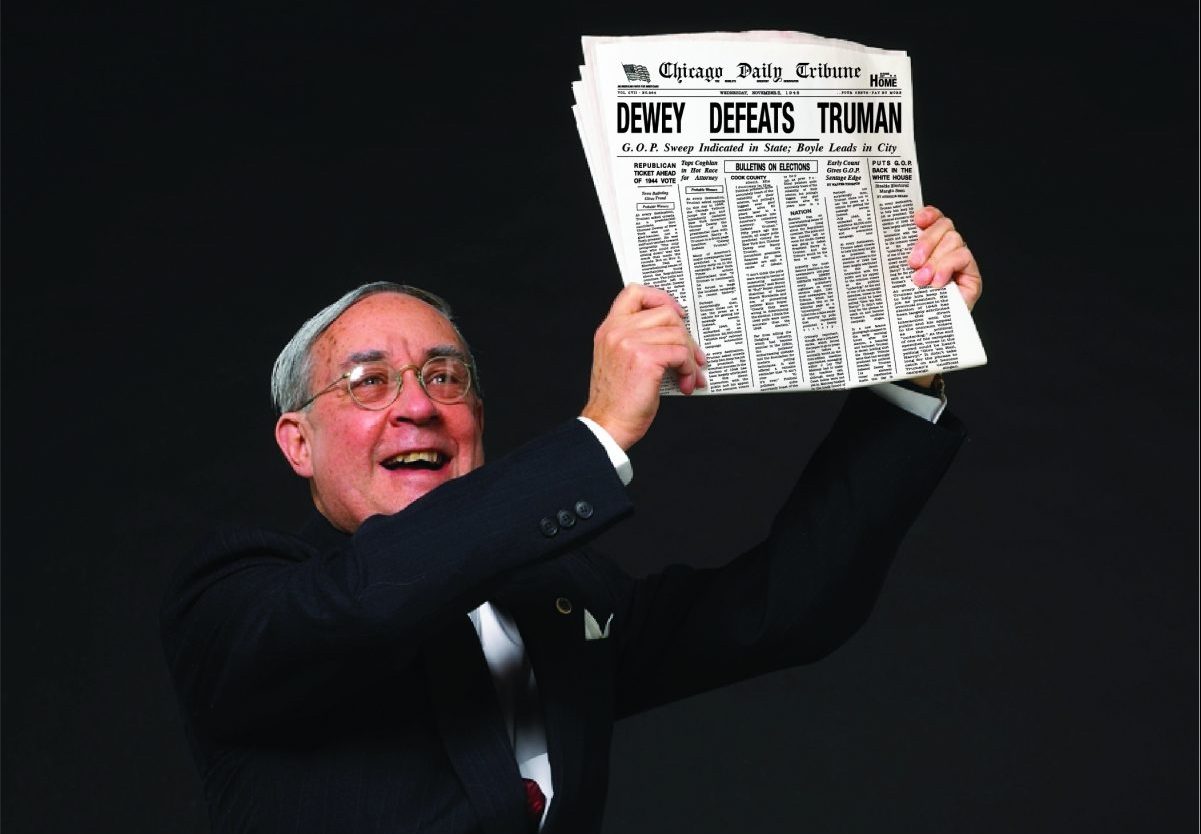
Midnight Company presents "Give 'em Hell Harry"
Midnight Company presents “Give ’em Hell Harry”

It brought back a play it had done before (at The Missouri History Museum, during the dawn of the Obama administration) — “Give ‘em Hell Harry” by Samuel Gallu, the one-man show depicting the life and times of Harry S. Truman. The play premiered in 1975 with James Whitmore in the role. The show was shot on the then-innovative format of videotape and released as a major motion picture (for which Whitmore received an Oscar nomination for Best Actor.)

The play begins with Truman’s days in the White House, a tumultuous time. After three terms of Franklin Roosevelt guiding the nation through the Depression and World War II, FDR’s death propelled Truman into the Oval Office, introducing a new president that the nation knew only slightly (as FDR knew him only slightly.) Truman’s first four months in office were some of the most critical and overwhelming any President has ever faced: Four months that saw the founding of the United Nations, the fall of Berlin, victory at Okinawa, firebombing in Tokyo, the Nazi Surrender, the liberation of concentration camps, mass starvation in Europe, the controversial decision to drop nuclear weapons on Hiroshima and Nagasaki, the surrender of Imperial Japan, and finally, the end of World War II and the rise of the Cold War. After Franklin Roosevelt died, and the unknown senator from Missouri took the oath of office, what was called Truman’s “Accidental Presidency” began. But his performance as leader of a changing world in crisis during those whirlwind four months, and after, continues to enhance his reputation and regard.

Two recent books underline the continued interest in and appreciation of Truman’s term in office. Chris Wallace’s “Countdown 1945” focuses on those first few months of the Truman presidency, narrowing in on the final preparations and Truman’s decision to use the Atomic Bomb to end World War II. And A.J. Baime’s “Dewey Defeats Truman” moves ahead to 1948, when Truman’s whistle-stop tour of America helped his underdog campaign win back the White House. (Baime also wrote 2017’s “The Accidental President,” which explores the first four months of the Truman presidency in detail, but also gives a good, balanced overview of his early life and career in Missouri.)

Through research, Midnight (along with most everyone else) came to the conclusion that Harry S. Truman was, at minimum, a decent human being who sat in the Oval Office. It was their goal through this play to offer that example, and to instigate more thought about the type of person that should lead our nation.

At the time of this writing, “Give ‘em Hell Harry” is still scheduled to run this Sept. 17-Nov. 3, at .ZACK Theatre.

At The Kranzberg Theatres: The Fall Shows – New Show For October?

And for an on-going theatre company, the selection of which plays to present never ends.

For Midnight, with the rescheduling of “It Is Magic,” there are now open dates in late October. Midnight does not have to fill those dates, but already has a play in their pocket that — worldwide pandemic allowing — will run at that time.

Note: Any productions that happen at Kranzberg Arts Foundation spaces in the coming months will be rigorously prepared and extensively monitored for safe audience experiences. See the Foundation’s COVID-19 Mitigation Policies here.

And also for Midnight, that leaves June 7-June 27, 2021, at the Black Box Theatre inside The Kranzberg waiting. Hoping things will be back to some kind of (new) normal, the Company is currently looking into a number of scripts for that time.

To stay up to date with what’s happening and what’s coming up, check kranzbergartsfoundation.org for updates on all the activities at their various spaces. And check out midnightcompany.com for the latest on their shows.


Joe Hanrahan is the Artistic Director of The Midnight Company.  As an actor and director, Joe has worked with many St. Louis theatre groups, including the St. Louis Rep, the Black Rep, Upstream, Stray Dog, Metro Theatre, New Jewish Theatre, the West End Players, R-S Theatrics and SATE.  As a playwright, his scripts have been produced by companies and festivals in Kansas, Brooklyn and St. Louis.  As a company, Midnight has produced many works new to St. Louis in a variety of spaces, as well as performing at the Philadelphia Fringe Festival and the Jesse James Farm in Kearney, MO.
22 Jul 2020

Videos and process behind the artmaking for “It Hits Home”

By Christine A. Holtz and Jessica Witte

In March 2020, this New York Times headline grabbed readers’ attention: ‘I Feel Like I Have Five Jobs’: Moms Navigate the Pandemic. Simultaneously, artists Jessica Witte and Christine A. Holtz were responding to these exact same sentiments through artmaking.

Prior to the pandemic, the two artists were scheduled to hang their show centered around caregiving and parenthood at the end of May. As everything began to shut down, Jessica and Christine were given the option to reschedule for the following year or follow through with their show as the first physical show scheduled since the shutdowns occurred. The second of these two options would pose several unknown challenges for public viewing and the logistics of creating a collaborative show while social distancing. Both mentally and physically exhausted from homeschooling their children and working remotely from home, the artists had to make a decision. Christine called Jessica that evening and said, “I think we should do it. When has our subject matter of caregiving and parenthood been more amplified than in this current situation?” Both of them decided to sleep on it and make their decision the next day. Ultimately the two friends motivated each other to take on the unknown along with making new works, and the exhibition “It Hits Home” was born.

Artist Christine A. Holtz shares her creative process making new artworks for “It Hits Home”

I make all my artwork in my living room — which transforms into a studio once everyone else is in bed. When the pandemic started, I began furiously jotting down inspiration and conceptual ideas in my notebook/sketchbook. My emotions about the pandemic needed an outlet. My dining room table, now a schoolhouse and home office, caused stress just looking at it. To add insult to injury, I would step on Legos at the base of our stairs almost daily (which inspired “One Step from (in)Sanity”).  A huge part of my artistic practice is a reflection of the absurdities endured during my everyday life. The pandemic provided an abundance of absurdities. In the evenings, my husband and I would work out in our living room after the kids were in bed as a way to relieve stress. We often elbowed or kicked each other due to lack of space, but it made us laugh. It helped us stay connected. Exhausted and feeling defeated from the day, my living room transformed from family space to workout room to studio, where working on art provided me with a release for my flood of emotions.

Covid-19 Work Blazer” is a work uniform for the pandemic. The blazer has three sets of sleeves to show the extra arms needed to take on the additional job of homeschooling while also transitioning my job of teaching to a remote format. I plan to wear it this fall while teaching on campus.

https://www.katebackdrop.de/
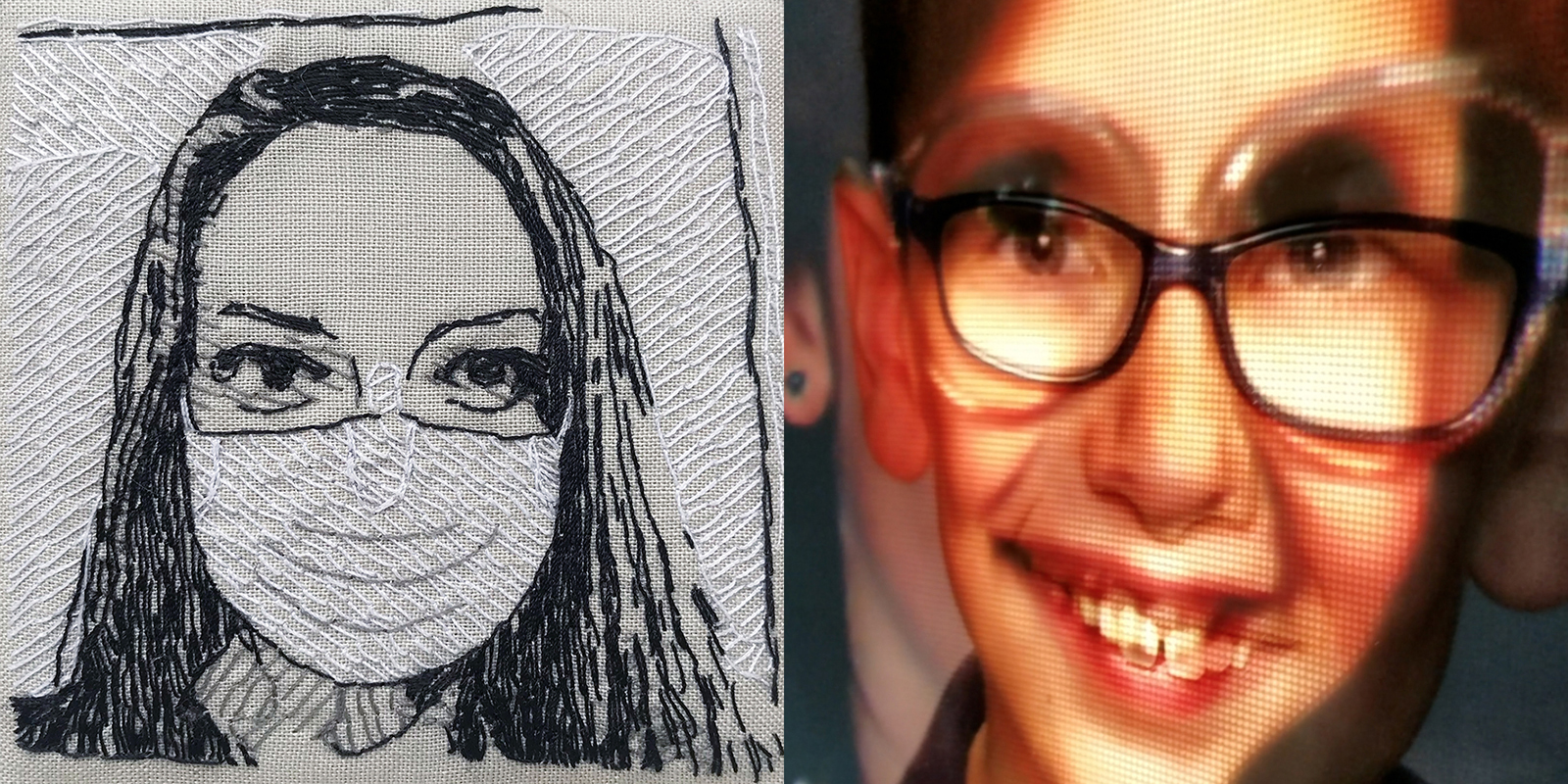
Daughters of artist Christine Holtz sit inside “Up a Creek Without a Paddle”

Up a Creek Without A Paddle” filled up my entire living room floor during construction. It is made from an old set of bed sheets out of necessity and to symbolize the home. Due to tight quarters and the size of the piece, I had to actually sit on the floor and move my sewing machine instead of the fabric to make each of the seams. I needed to make this boat. I needed to do whatever it took to keep my family safe. I know it is absurd — so is the situation. It is also a very raw display of how helpless the pandemic has made me feel.

More people being confined to the domestic environment due to the stay-at-home orders has amplified the uneven division of labor in the home. I wanted to follow through with this exhibition in hopes that the work would resonate with more people right now. I can’t help but wonder if our show would have been received the same way without a pandemic.

Artist Jessica Witte shares her creative process making new artworks for “It Hits Home”

As soon as we made our decision and connected again to talk strategy, Christine shared her idea for a huge mask/boat titled “Up a Creek Without a Paddle.” Her idea was inspiring and could be an anchor for the show’s new direction. Christine added, “I know it will be hard, but I think we will both feel better if we can process this while it is happening.”

With the baseline anxiety of everyone being so high, I definitely felt the stress on my students, myself, and my family. I began hard training again with running to exhaust myself physically as well as emotionally and help me sleep. Even though I have resources and support, every so often the stress of the situation would leak out and emotions would run high at home. “Smoke and Mirrors: everything is fine” captured those moments when small accumulations of stress exploded into outbursts. To create these little bombs, I inserted wicks into wool and laundry lint felt balls. Stabbing the felting needle repeatedly to form the ball and seeing the works take shape was cathartic, (Christine was right, again).

Witte: Thinking of the viewer at the window

Many people would see the show from the windows on Grand Boulevard, so how could we arrange “It Hits Home” to make the artwork most visible from the street? We placed Christine’s embroidery artworks close to the windows so her intricately detailed drawings would not be lost. “Up a Creek Without a Paddle” and her “Covid-19 Work Blazer” were timely, personal, and still humorous so they were close to the title and window. My new artworks needed to attract the eye with contrast and size but be light enough to be handled by myself alone (due to social distancing during install). Once I had spatial parameters in place, I could start sketching ideas.

What did I most want to say about the pandemic? I worried about my Grandma Rose isolated in her nursing home and my sister-in-law undergoing radiation therapy being at high risk for the disease. Encouraging others to realize how their behavior affects some of the most vulnerable (and to see their value) was my aim for the floor works in “It Hits Home.”

I decided to convey the bright, sunny colorful spirit of Grandma Rose — and make her comfortable and safe during this health crisis. I brought out her pile of quilts to inspire me. How could I also convey her vulnerability? Grandma Rose could have visitors through the glass of the lobby but was too fragile to have close contact in the same room. A drawing on the floor would be similar — easily destroyed by a misstep in the room, but safe when viewed from the window. How could I make the patterns as bright as the colorful quilts and clothes my grandma made for my children? Drawing in sidewalk chalk with my kids between teaching, or drawing some painting by numbers, furiously cleaning, and home-schooling helped answer the question.

Witte: Selecting and learning a new medium

I made lap-blanket-sized powdered chalk drawings into bold quilt patterns. The chalk came in vibrant colors and with the thick application could catch a viewer’s eye from the street. I had a tight timeline to learn how to use this new material, as my previous floor drawings were in seed, with a limited color range. I tested various chalk brands and how to grind and apply a consistent dusting. I made small laminated paper and foam-core templates to quickly stencil and layer the colors.

I dedicated “Targeted Treatment” to my sister-in-law Lori and her fight with breast cancer. I interviewed friends and family who had battled cancer about symbols that best represent their treatment. Caretakers and patients mentioned a new sense of time after a cancer diagnosis. The pattern has seven columns and four rows like a calendar page. A ring of cancer-awareness ribbons surrounds crosshairs in each block. Bullseye targets are peppered throughout the “calendar page” of the pattern to make one think about being an easy mark for the virus.

You Are My Sunshine” is patterned in bold blue and yellow sunburst shapes centered around archery target centers. I left every other square bare except for the center target highlighting the isolation of the residents of nursing homes.

Please wear a mask in public, reach out to your neighbors and loved ones, work out, get sunshine every day, and be kind.

Related: “It Hits Home” virtual exhibition

07 Jul 2020
All About Love: New Visions by Bell Hooks

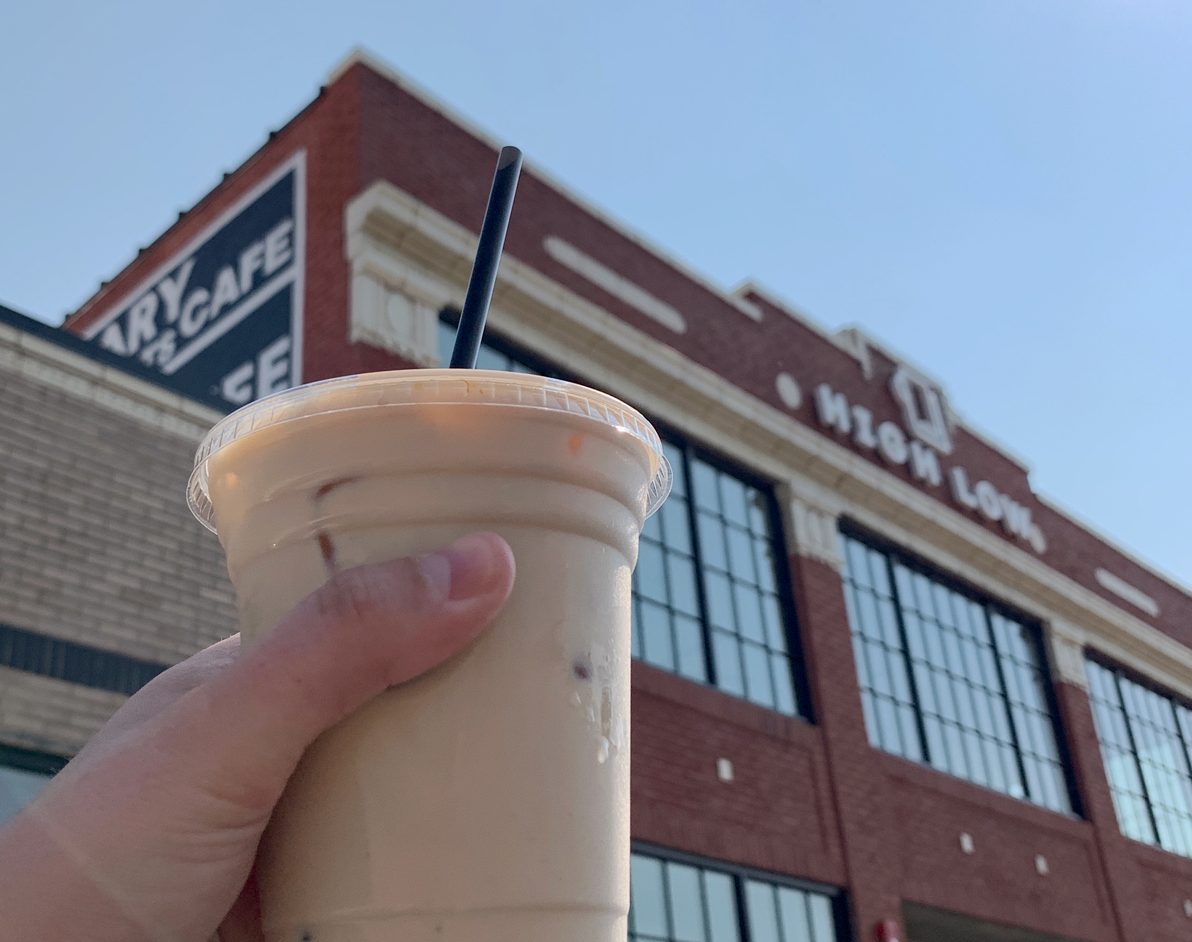
For this edition of High Low’s “Caffeinated Curation” series, we’re featuring an Iced Chai Latte from Blueprint Coffee and “All About Love: New Visions” by bell hooks.

This pairing was recommended by artist Hayveyah McGowan ahead of her virtual opening reception for the exhibition “Feelings of Home: A need to simplify,” on Friday, July 10, at 7 pm on Instagram Live.

McGowan writes:

“In this context ‘maternal surroundings’ are not bound to the idea of a certain sex rather its the qualities of birthing receptivity, nurture, and sensuality, all expressed through the subtle realm and reinforced in the physical. Through this alchemical process I want to call attention to, not only, the unique ways that the black maternal lineage creates safety but also the synchronicity and rooted need for safety that we share.”

The exhibition will be on display at High Low Gallery by appointment only through Aug. 14, 2020. Click here for more information.

Blueprint Coffee at High Low is now open for curbside pick-up and patio service, Monday through Friday, 8 am – 3 pm. Order online here.

Read more from the Caffeinated Curation series here.

29 Jun 2020

Pride Month as we know it spawned from the violent riots at Stonewall Inn, in New York City, in 1969. Black queer folks including Stormé DeLarverie and Marsha P. Johnson were instrumental in this demonstration for LGBTQ rights. 

“No pride for some of us without liberation for all of us.” This quote by artist Michah Bazant who included it on a portrait of Johnson resonates boldly today as we continue to work toward dismantling systematic oppression in all its forms.

We asked our Kranzberg Arts Foundation family, “What does Pride mean to you this year?” Here are some of the responses we gathered.


Matthew Kerns of St Lou Fringe and his husband with marriage license
Matthew Kerns of St Lou Fringe and his husband with their marriage license

“I came out of the closet in my early 20’s during the mid-’90s. When I came out I vowed to never go back in; not for a relationship, job, or any reason whatsoever. It has been a long road filled with daily battles for equality… every battle has been totally worth it.

“I live in a state that hates me. It fought against my right to live as an out and proud homosexual man, marry my husband, adopt a child, and even still to this day allowed others to discriminate against me in my workplace. 

“If there is a right for a straight man in Missouri the state government will actively and openly work to keep that same right away from a gay man.

“Missouri may hate the LGBTQIA+ community, but Lady Liberty loves us and she proved again [this month] that love always conquers hate.”

#LoveWins

 -Matthew Kerns, Executive Producing Director for St Lou Fringe


“Pride is canceled.

“I’m thinking about Rem’mie Fells, Riah Milton, Nina Pop, Tony McDade, Kiwi Herring, & way too many other Black trans folx murdered at the hands of state-sponsored violence, white supremacy, transphobia, & other systemic oppression. I’m thinking about all of the Indigenous trans & two-spirit folx who are murdered and missing, whose stories are usually erased and unheard under the same violent systems of power that are taking their lives. And how none of them get to live to celebrate their queerness, their joy, their magic, their fierceness, their aliveness.

“As a queer mixed-race east Asian femme artist, this time for me is another reminder of how acutely I (& we, but to speak for myself) need to continue to examine and use my roles, my art, and my relationships to power, privilege, and oppression to co-shape the reality many of us want to see. One that centers Black and Indigenous liberation & life & pleasure & creativity & wellness & leadership — especially that of Black & Indigenous trans womxn & two-spirit folx & non-binary folx & queer folx.

“To me, that’s a kind of pride to celebrate.” 

-Erika Harano, company artist + educator for Consuming Kinetics Dance Company


“These are celebrations [Juneteeth and Pride] of our human rights. What we do now and from now on will contribute to the changes we need for our future, for equal rights, and for equal treatment as a human race.” 

-Dawn Karlovsky, Founder and Artistic Director, Karlovsky & Company Dance


“For me, PRIDE is about celebrating diversity, inclusion, and the LGBTQIA+ community. It is a time to actively promote one’s self-affirmation and for everyone to reflect on the true meaning of acceptance and love for all of humanity.”  

-Ashley Tate, Artistic and Executive Director, Ashleyliane Dance Company


“I salute Pride Month. I honor my LGBTQ colleagues in the Arts. And I’m so happy about this [month’s] landmark Supreme Court decision, making this month, perhaps, the most significant Pride Month ever.

“And I salute all my fellow humans, of whatever stripe, who are carrying on through the challenges of our time to lead us to a brighter future for all.”

-Joe Hanrahan, Co-founder and Artistic Director, The Midnight Company 


“It’s fitting then that Juneteenth and Pride are celebrated in the same month. Both groups have endured struggle, hardship, and inequality, fighting tooth and nail for every inch of acceptance within the majority culture. Black and LGBTQIA communities have much to celebrate, but their celebration is bittersweet, not just this year but every year. The fact that these two groups share celebratory space isn’t all that weird when we consider how inequality and injustice found in American society are often interconnected by systems, institutions, and individuals. 

Quote by James Baldwin, Art by Megan Kenyon

“One of my favorite Black authors also happened to be a Gay man; James Baldwin. He is the originator of the quote in the illustration. He reminds us that our character, integrity, leadership, love, is determined by how we treat those who have been pushed to the bottom, denied their full expression of humanity, left to be forgotten. 

“Celebration, with its twin sides of lamentation and joy, helps us to combat this desire to forget people not like us. It helps us see the other as just as human as us, full of the same emotions of joy and sorrow, fear and courage, hope, and despair. I hope [this] month gives you an opportunity to learn about the many beautiful aspects of Black and LGBTQIA culture, why they are worth celebrating, and that you not shy away from the sorrowful bits, but instead learn to sit with others in both their grief and their joy. 

“We can never be the America we say we want to be if we do not learn how to love our neighbor as fully human, worth of dignity and justice, and worthy of our care and concern, regardless of color, nationality, orientation, gender, age, ability, religion, political affiliation, class, and any other distinction we could put out there. “

 -Megan Kenyon, 2020 visual art exhibitor

*This is an excerpt from a longer essay on the topic of Juneteenth and Pride written by Kenyon. Read the full essay here.*


“It’s so important to celebrate and support each other – all of us, no matter how we look or identify, are loved and important. One Love.” 

-Janet Evra, 2019-20 music artist in residence

19 Jun 2020

This year, Juneteeth comes amid a global pandemic and an invigorated movement against police brutality and racism. While the day commemorates the emancipation of the last enslaved people in the Confederacy, specifically in Texas, the ancestors of those who were enslaved are still fighting for liberation as systematic oppression has not disappeared, but merely transformed and has become more insidious.

With this in mind, we tapped into the powerful and transformative capacity of the arts to share the voices of our resident artists and organizations. 

We asked our Kranzberg Arts Foundation family, “What does Juneteenth mean to you this year?” Here are some responses we gathered …


“Juneteenth is the celebration of the liberation of Blackness.

“To me, it represents disembodying white supremacy in all forms so that Black people have the freedom to just be.

“I hope one day Black lives and bodies gain true, tangible freedom, reparations, and justice in this country and in this city. And I hope for it soon.”

-Katarra Parson, 2019-20 music artist in residence


Ashreale McDowell, photo by David Moore, edit by Sonja Petermann

“As a Black woman, I am ashamed to say that I never truly understood the importance of Juneteenth and what it means for my community. It wasn’t something that was taught in the schools I attended, and it really wasn’t mentioned amongst conversations where I grew up. 

“My entire life I celebrated the fourth of July. I loved the fireworks and all of the festivities that take place during that time. In the midst of all the excitement and glamour of celebrating the fourth, I never really stopped to think about what I was truly celebrating. 

“July Fourth, America’s independence day, America’s “freedom” day. How could I have been celebrating a national holiday of independence and freedom, when in reality it wasn’t meant for me. 

“My people were not free, there was no independence for us. We are still not free. We are still living in a world of racism and social injustice. We are fighting to have the right to LIVE! I made a vow to myself and to my people, that I will no longer celebrate and participate in a holiday that was not meant for us. 

“For me this year, Juneteenth means awakening!” 

-Ashreale McDowell, Assistant Artistic and Executive Director, Consuming Kinetics Dance Company


“Juneteenth is a time to celebrate how far we as a society have come while assessing how far we still have to go. This important day still receives little attention, but I am hopeful that because of recent events that will change. 

“Juneteenth, to me, means that while this marked the end of slavery in the United States, it represents the greatness that is the African-American legacy. It represents breaking chains and breaking barriers literally and figuratively…something that I hope continues with greater acceleration.”

-Ashley Tate, Artistic and Executive Director, Ashleyliane Dance Company


Saint Louis Story Stitchers commemorated Juneteenth with the release of a new podcast episode. In Episode VII, from the StitchCast Studio, St. Louis youth discuss “Compounding Issues” during the pandemic such as health disparities, mental health, economy and unemployment, education facing St. Louis’ economically-challenged minority neighborhoods. The episode was recorded on May 26, 2020. Listen here. 

StitchCast Studio Drop June 19 from Saint Louis Story Stitchers on Vimeo.


“Growing up in Texas, I remember when Juneteenth became a state holiday in 1980. That was a long time coming. Just like the 1865 event it celebrates — the announcement in Galveston made two and a half years after Lincoln’s Emancipation Proclamation. I want to celebrate progress, but why does it always take so long to get here?” 

-Philip Boehm, Artistic Director, Upstream Theater


“I salute Juneteenth. I honor my Black colleagues in the Arts. And I’m proud of those who have taken to the streets in the last several weeks, making this Friday, perhaps, the most significant Juneteenth ever.”

-Joe Hanrahan, Co-founder and Artistic Director, The Midnight Company 

29 May 2020

From a variety of virtual performances to hours of educational content, explore the list below of digital resources provided by our resident organizations and artists. Have a digital offering your organization wants to add to the list? Let us know by contacting us here.

Educational classes and resources

Entertainment and engagement resources

28 May 2020

“You’re going to have to bring your own popcorn for this one!”

Reimagining what it looks like to connect with the community this year, Kranzberg Arts Foundation resident organization Circus Flora is planning to debut its Virtual Showcase on its website at 7 pm on Thursday, June 4 — the original opening night of their 34th season that has been postponed until 2021.

“There’s really no way to recreate a full-blown Circus Flora production, but we thought we’d do things a little differently,” said Managing Director Karen Shoulders.

Similar to a typical Circus Flora show, viewers can expect to see a variety of acts by performers from all over the world. Also a part of the digital experience this year will be music, guest appearances, and behind-the-scenes footage.

“The Daring Horseman, Caleb … he is practicing and has a new horse and is going to show us what he’s up to,” Shoulders said.

Without giving too much away, another performer Shoulders said viewers can look forward to is Adam Kuchler, a juggler and physical comedian who appeared as the Bellhop in the company’s 2018 production.

“It’s kind of nice to see from your home what our performers are doing,” Shoulders said. “They’re from all over the place, and we can still kind of be together and still experience the same kind of intimacy that Circus Flora is known for — but just in a different format this time around.”

Although we aren’t gathering under The Big Top this summer, Circus Flora’s Virtual Showcase is a modern example of how the community can continue to connect and engage with performing arts.

“This isn’t our first trial and tribulation,” Shoulders said. “There have been many things in our history that have proved to be challenging … but we go on with the show.”

15 May 2020

This year looks a little different than what most people expected going into it. That is no exception for Building Futures. 

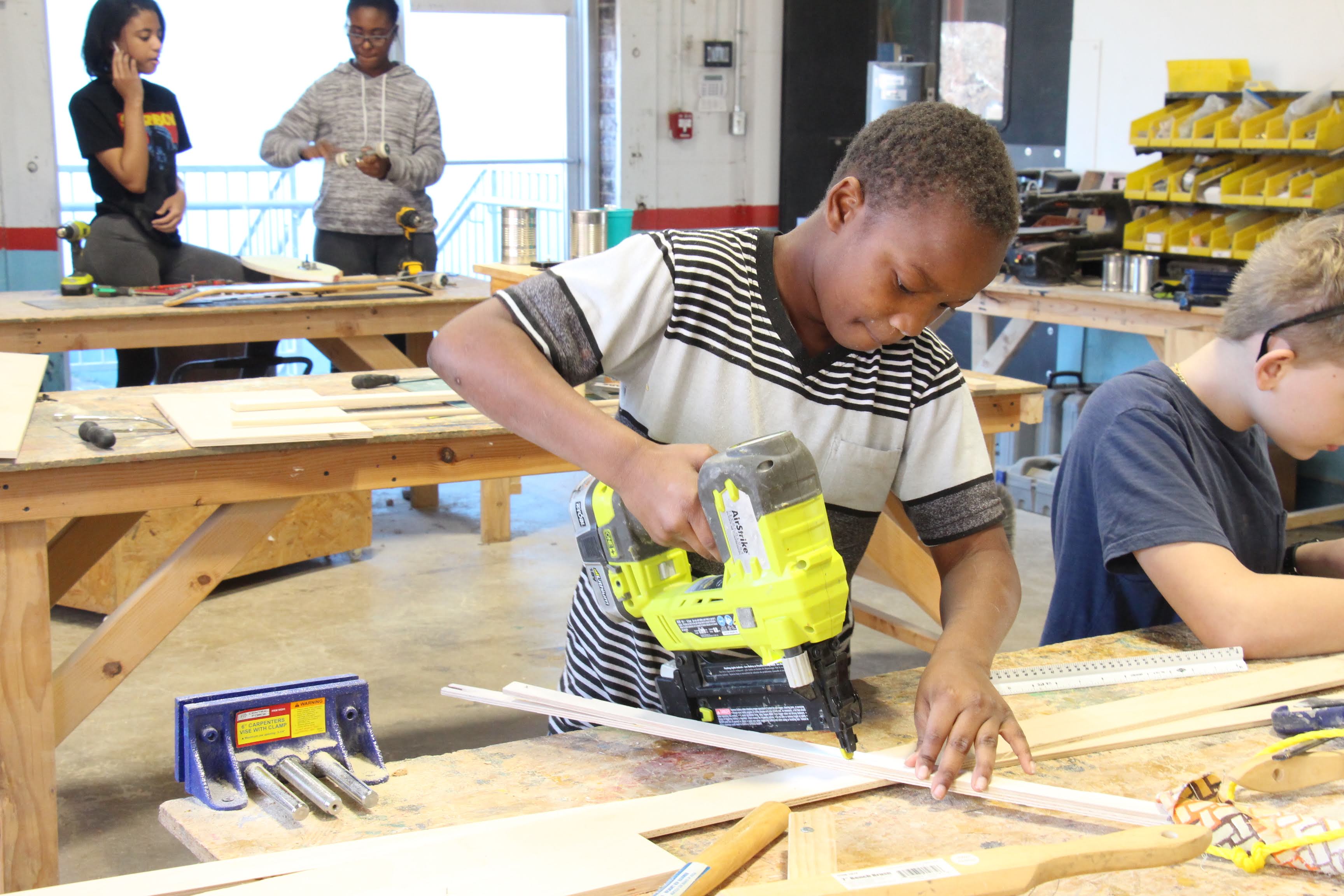
The Kranzberg Arts Foundation resident organization hosts hands-on STEAM (science, technology, engineering, arts, math) workshops for local students, however, since the spread of COVID-19, Building Futures is having to build its own future a little differently than originally blueprinted.

“It’s been a new challenge to identify ways to transform methods we’ve created in-person to a virtual platform,” said Grace Pettit, digital marketing specialist for the organization.

Like many other resident organizations, for Building Futures pivoting to digital means maintaining a connection with the community as social distancing becomes the new norm. 

“We’re focused on presenting ideas to students that haven’t been solved before … 

we are living what we teach right now,” Pettit said referring to the pandemic. “There are many barriers and landmines … but it’s refreshing to live what our organization’s mission is about — preparing young minds and individuals to solve these unknowns.”

Exploring the digital environment

In March, the organization launched its “Always Building Online Workshops,” encouraging students to engage with their peers over video to explore new concepts.

According to Pettit, the free videos accessible via YouTube or Building-Futures.org are all student-led, featuring adult teachers as guests, and geared toward students in second to seventh grade.

“In that respect, peer-to-peer learning is kind of happening,” Pettit said.

Virtual projects include designing a flying machine and building a tower out of straws. Students can also learn how to use scrap wood to create art and a handful of other activities.

However, transitioning hands-on learning to a contactless model has presented its own set of challenges. 

“The learning environment is so unique to Building Futures. You come to a workshop and you’re introduced to an idea. You’re introduced to all the tools, methods, and mechanisms that could get you to that end goal … We’re still working through how to capture all of those steps [on a virtual platform],” Pettit said. There are a lot of nuanced moments within learning, especially with what we do and how we do it, and virtual really hinders that.”

Connecting with students in new ways

Despite these obstacles, Pettit said they’ve received photos and videos of students’ projects. Messages from parents thanking them for the online workshops have also been sliding into their DMs.

“It shows that we as Building Futures understand that we need to be taking responsibility for producing and connecting and engaging with [students], even if it doesn’t look the same,” Pettit said. 

Building Futures continues to adapt and build a future for its students however it can.

“We’re really looking forward to continuing to work and come up with new ways to meet these challenges and support our students, educators, and community through whatever means possible,” Pettit said.

Image courtesy of Building Futures.

08 May 2020

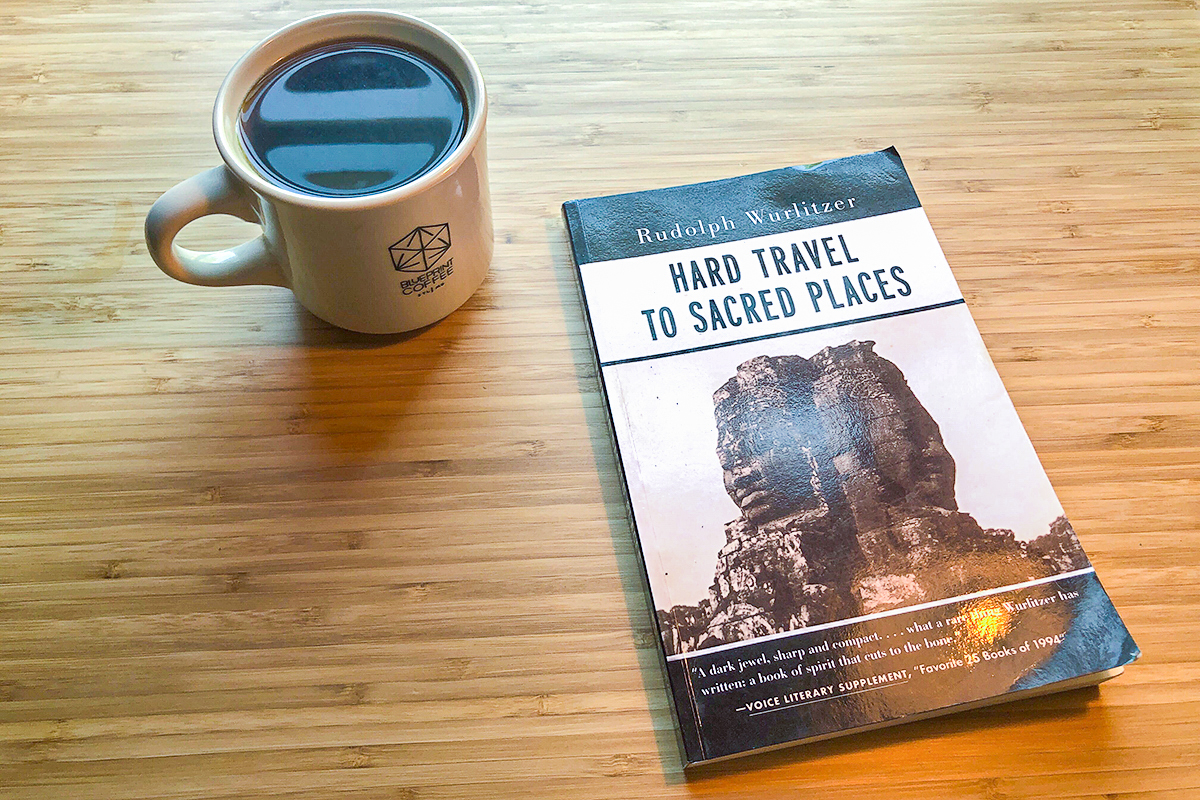
High Low‘s “Caffeinated Curation” series of books paired with beverages from Blueprint Coffee is back for another work-from-home edition, this time from the general manager of The Dark Room, Abbie Finley.

“I’m pairing  Norikori, Papua New Guinea single-origin coffee with Hard Travel to Sacred Places by Rudolph Wurlitzer. They both tell stories of places preserved in isolation and places filled with culture, diversity, and life. 

“My mornings now as they always have, start with coffee. The Norikori is something unexpected. I eyeballed the pour-over at first, causing it to be under-extracted and sour. Then, with intention and patience, I repoured for the sweetness and balance. 

“I bought this book as a means of escapism — the story that Rudy tells is a travel guide of Southeast Asia, as he and his wife try to cope with the immeasurable weight of loss. He is trying to find truth in the Buddhist scripture as they remove themselves from their own chaos, mourning through Thailand, Burma, and Cambodia. 

“More than ever, I find solace in the thought of patience right now. The world is changing; my world is changing. It is easy to want to rush and to push forward out of the unknown. I think of the sour pour-over, that held the tropical notes back, and one of the Buddhist quotes:

Be stirred by things which may well move the heart, And being stirred, strive wisely and fight on!  – Nyanaponika Thera

Read more from the Caffeinated Curation series here.

01 May 2020

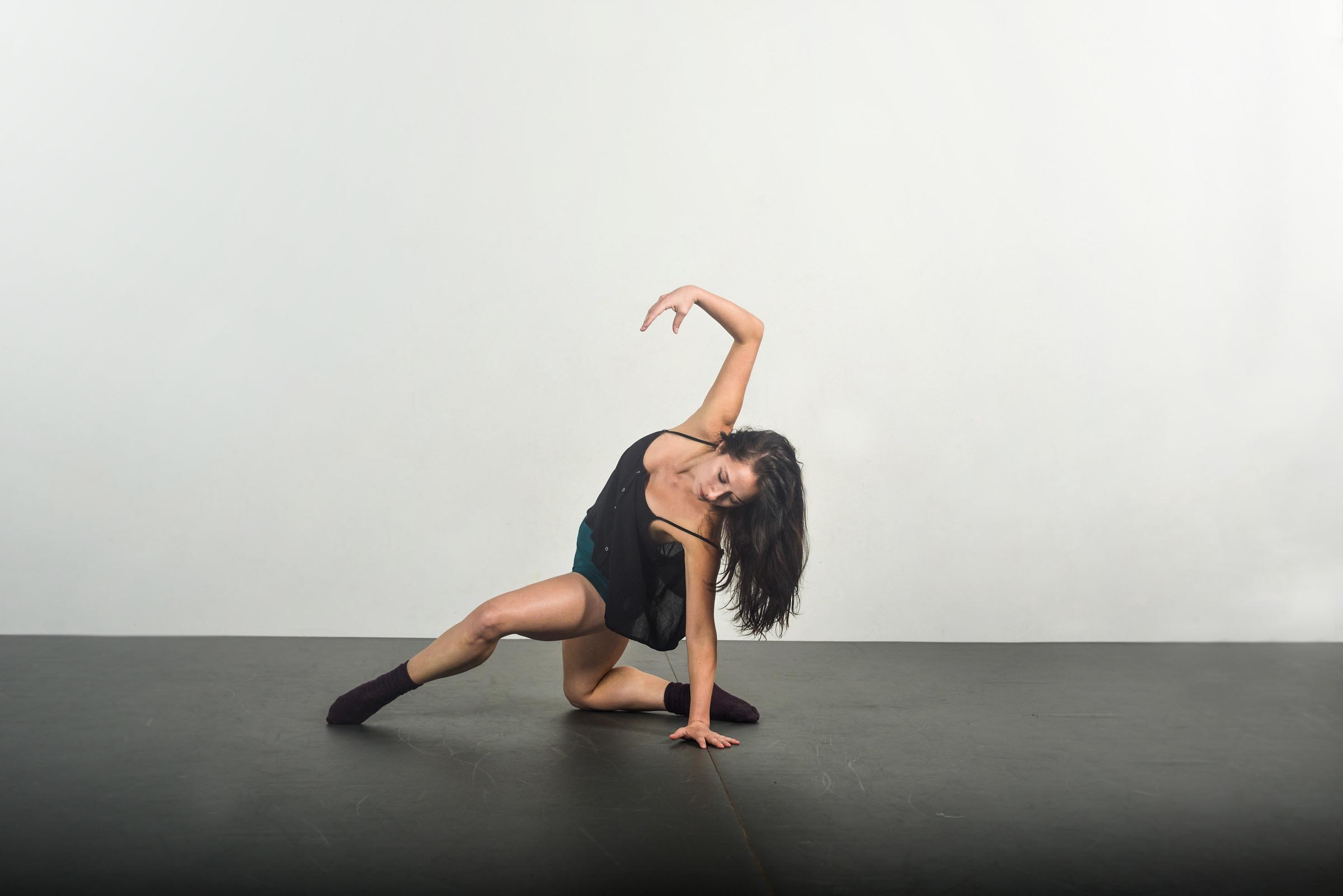
St. Louis-based Consuming Kinetics Dance Company will begin its 11th year May 1, so we checked in with Arica Brown, Founder/Artistic and Executive Director, to talk about the ups and downs the past decade and a year have brought for her and the resident organization.

Like many of the Kranzberg Arts Foundation performing arts residents, CKDC has been virtually active since COVID-19. The dance company has pivoted their educational programs to Patreon, a platform in which users can pay for digital content at various price tiers. Check out CKDC classes on Patreon here.

Q: How are you?

A: I’m doing pretty well, actually. There’s always a silver lining … I’ve been able to get really caught up on all things business. Our files are super organized right now, I’ve gone through all of our archives of videos and images … We updated our website. We’re finally future-focused looking at some strategic planning and development, and we have already planned to hire our second full-time employee this year, which we’re still optimistically moving forward with.

We miss everyone. It’s weird for me, as an extrovert, to not be interacting and collaborating with people and creating art, but we’re adapting and I certainly have found some joy in this sad time.

Q: Where did the idea to start a dance company come from?

A: I always feel a little bit guilty telling the story because it’s not as exciting as I think people hope it is. In 2009, I was right out of undergrad and I wanted an opportunity to continue choreographing, because I found dance really late in life, and I found choreography even later in life … So with my dance degree, I had a full-time career in IT, but I was keeping the dancing going on the weekends and evenings, so I was just as busy as ever just like I was in school.

A group of friends of mine and a few more community dancers that we recruited were just rehearsing and the only performance opportunities that we had were just these organized St. Louis events … that’s basically it. We didn’t have our own concerts, we didn’t have seasons. We used the name Consuming Kinetics Dance Company, and we fully committed to that identity and saw ourselves as a pre-professional company, we just weren’t doing that much because we all had full-time jobs elsewhere.

At that point, I had been working for a couple different dance studios teaching around St. Louis, and I was teaching some kids classes — adult classes were not (common) in 2009 when I started the company. And as people started to become aware of us, they would ask if they could come to rehearsals, but they didn’t want to dance professionally, they didn’t want to go on stage or anything, they just wanted to do the warm-up.

So, I started to realize there’s a market in St. Louis for adults who wanted to dance for extracurricular or for an alternative to whatever other fitness thing they could be doing. I started observing nationally to see if this was a thing … I found that it was not uncommon in the Pacific Northwest and on the West Coast to have a studio that opens exclusively to offer adult classes or companies, like ours, that has an education program … Eventually we started our own business inside the studio and after a couple of years, it just really grew … we outgrew the space and eventually it became a full-time job … I left my job … I always say I didn’t “found” the company, the company found me. I think my biggest (skill) is just bringing people together, and being community-focused, so I’m not good at saying no, and I’m really good at meeting the demands of the community. That’s how it all started.

Q: When you started CKDC in 2009, what music were you singing along to in your car?

A: Oh my God, I love this! There’s a Canadian band named Stars and definitely that was in the CD player of my car playing constantly 24/7. Especially in spring and fall with the windows down, I’d definitely be singing those songs at the top of my lungs as I’m driving around St. Louis.

And then also a little bit more inspiration for my serious, artistic side is a band called Lydia, which I named my cat after actually, because I think Lydia the band is perfect, and I think that my cat is perfect. They are very different now than they were back then, but they had a male and female vocal lead that shared this really beautiful melodic interlacing, catching, pseudo-folk pop music.

I was also starting my obsession with Drake.

Q: Where has dance taken you in the past 11 years, geographically speaking?

A: Part of our strategic plan, our three-year-action plan even, this year our big milestone was hiring a full-time person because one full-time person cannot sustain this org, and next year we hope to have a weekly or monthly stipend for our artists during rehearsals, so we hope to grow in that way, and our third year out, touring and traveling at least in the Midwest is a priority for us.

So far, myself and my assistant artistic director Ashreale, who we’re bringing on full-time this year, we’ve been the only two who have officially taken business trips except last year in 2019, we took a piece of mine to the Exchange (Choreography) Festival (in Oklahoma).

We definitely want to grow our national visibility, and so to this point, it’s been mostly business research since 2009. Every year I would go back, check in on the studios and companies I identified and create relationships with their directors and learn about the new ones that have popped up. Ashreale and I went international, I think it was in 2018. We went to Dublin, Ireland, and also London, just to take dance classes and see where we were on an international scale and kind of how we fit in and see if there are other progressive things we need to kind of get on the boat with.

It was a really great experience. She and I saw one of the most memorable concerts we’ve ever seen in our lives when we were in London, it was just unbelievable and it was a two-man dance performance. I even emailed whoever was the artistic director of Dance St. Louis at the time, it was like an interim and I was like, “You need to bring them here.” We were just so into it. So mostly for inspiration and business growth and seeing how other people run classes making sure we’re keeping up with the times. It’s taken me all over the United States, for sure, and then a little bit internationally, and hopefully more of that in the future.

Q: What’s something you’ve thought about trying in the past 11 years but haven’t yet?

A: In alignment with bringing on Ashreale this year, I hope to have more time that is not work.

A lot of people will say, “You’re so lucky you get to do what you love for a living,” and while that is absolutely true and I am so grateful, what people sometimes fail to realize is that you can get burnt out on things that you love just as much as you can get burnt out on something that you don’t love so much.

I would definitely say that the goal is to share the labor of love and be able to employ another full-time artist, which is a part of our mission — to support artists who want to work full-time, and also less things will fall through the cracks … All of those things will help me personally be able to react from a more calm state and be able to better tackle obstacles that come our way including concert cancellations and ongoing struggles with the pandemic, if that is a thing, and who knows what else.

The life of a nonprofit is always torrential and it can be traumatizing at times, but to have another person on my team tackle that and go into the darkness with, I think it’s going to be a huge emotional benefit for me.

Q: What is your favorite dance move?

A: Hahaha, something that’s codified that has a name that I can think of is “banking,” like banks of a river … it’s like a slide on the ground on one leg on the outside of your shin so a little bit hitting the meaty part of your calf muscle and your top arm circles over your head like a helicopter and you just glide on the floor, and there’s so many variations on that move. I love floor work so that’s one that has a term I can assign to it and most people will know if they are dancers. I’m not into ballet, I’m not a “bunhead” or anything, I don’t love pirouettes and jumps, I just love dance as an expressive and healing art.

Q: So, in a life where you might go to the club, are you banking on the dance floor?

A: Hahaha, no, I’m definitely going to pull out my hip hop moves and social dance skills, and I love going out to dance, so definitely that happens in my world. That may or may not be how I found out I love to dance.

Q: Can you recall a time in the past 11 years that has been more challenging than dealing with COVID-19?

A: Yes, and that’s one of the things that I keep trying to remind myself of, is that we’ve been through worse, hypothetically, right? We don’t know how long this thing is going to go on, but like Wednesday, April 29, is our anniversary of the worst hardship that we ever had to overcome. … We were renting from another studio in 2015, and our pretty informal leasing agreement got terminated with no notice, day of. We were ceasing all of our classes and rehearsals in the space. And so we had a student dance concert coming up in a couple of weeks … and we were working on a professional concert that we ended up combining our student and professional companies in one night because of the hardship.

I just remember myself and my two associate directors at the time just sat on my floor of my apartment and wondered, “Is it over? Are we just going to fold after five years, or are we going to suit up and make this thing work?” We didn’t give up obviously. We spent the entire summer — May, June, July — renting from random facilities all over St. Louis … and we just took a month at every location and got feedback from our clients… all the while I was searching real estate, and that’s when we found our studio at 460 Whittier, which is just a couple blocks east of where we are now. We were at Whittier and Olive, now we’re at Taylor and Olive.

We really have grown in this neighborhood, and everything’s changed, you know, things that we thought were benefits to our organization like being under someone else’s roof and paying a sub rental fee and not having all the overhead. I mean, for sure, our expenses are astronomical now compared to what they were, but our exposure has also increased over a hundred fold. Just the physical act of having your own brick-and-mortar and your own logo on the door and traffic driving by and seeing you, has changed everything for us. We’ve been able to further our mission of making dance accessible to everyone and spreading the joy of dance … Everything changed, again it was another hardship time, it was something that looked like an obstacle that we could never overcome, yet somehow it ended up being the best thing that could have ever happened for us.

I always quote one of my favorite artists, Jen Sincero, she says, “On the other side of your fear, is your freedom.” … We’ve been through worse, and we can survive this. We’ve done it before.

Q: What is one thing you’re proud of?

A: I’m so proud that May 1 is going to be our 11th year, like I can’t believe it. We’ve been celebrating 10 years for a whole year, it doesn’t even feel like the end of our 10-year celebration, and you know, we can’t really market 11 years like we’ve marketed the 10-year celebration … But me, personally, I’m super celebrating because I feel too young, and I don’t even understand how it’s already been 11 years, but it’s pretty incredible.

Q: What advice would you give yourself 11 years ago; what did 2009 Arica need to hear?

A: Wow, that’s personal, but the huge difference between me in 2009 and currently, like the advice I think I would have benefited from the most is to not allow exterior circumstances to impact my inner calmness and happiness.

It was a much bigger struggle back then, before I had a full-time salary to do this, and before we had donors, before we had infrastructure. I mean I kept going obviously, tenacity saved the company, but I had a lot of times feeling sorry for myself. “Why is it like this? Why doesn’t St. Louis support the arts? How come dance is underfunded?”

And then I just took control, because if you can’t get what you need, then you have to manifest it, and I wish that back then I would have learned some of those lessons earlier because maybe we would have grown to this point sooner, and be already touring by now.

Q: What are you grateful for today?

A: I am grateful for our conversation today. Quarterly taxes are due, it’s a stressful week and I have to do payroll and I’ve only seen my boyfriend and my cat for over a month … hahaha … not that I’m mad — they’re great company, but it was great to talk to somebody outside of my new norm.

Accessibility Toolbar